


Screen printing and DTF transfers can both produce professional custom apparel, but they solve different production needs. The right choice depends on your artwork, order size, garment, desired feel, deadline, and budget.
This guide compares the two methods side by side so businesses, teams, schools, creators, and organizations can choose with confidence. Because Fresh Press Ink offers both methods, the recommendation can be based on the project instead of forcing every design into the same process.
Screen Printing vs. DTF Transfers: The Quick Answer
Choose screen printing for larger runs of the same bold design, especially when the artwork uses a limited number of colors. Choose DTF transfers for detailed or full-color artwork, smaller quantities, mixed garments, or personalized pieces.
| Project factor | Screen printing | DTF transfers |
|---|---|---|
| Best order size | Medium to large runs | Small to medium runs |
| Artwork | Bold designs and limited colors | Full color, gradients, photos, and fine detail |
| Personalization | Less efficient for changing names or numbers | Well suited to individual names, numbers, or variations |
| Print feel | Varies by ink coverage and garment | A smooth transfer layer on the fabric |
| Typical use | Uniforms, events, teams, and bulk merchandise | Short runs, detailed merch, samples, and one-offs |
When Screen Printing Is the Better Choice
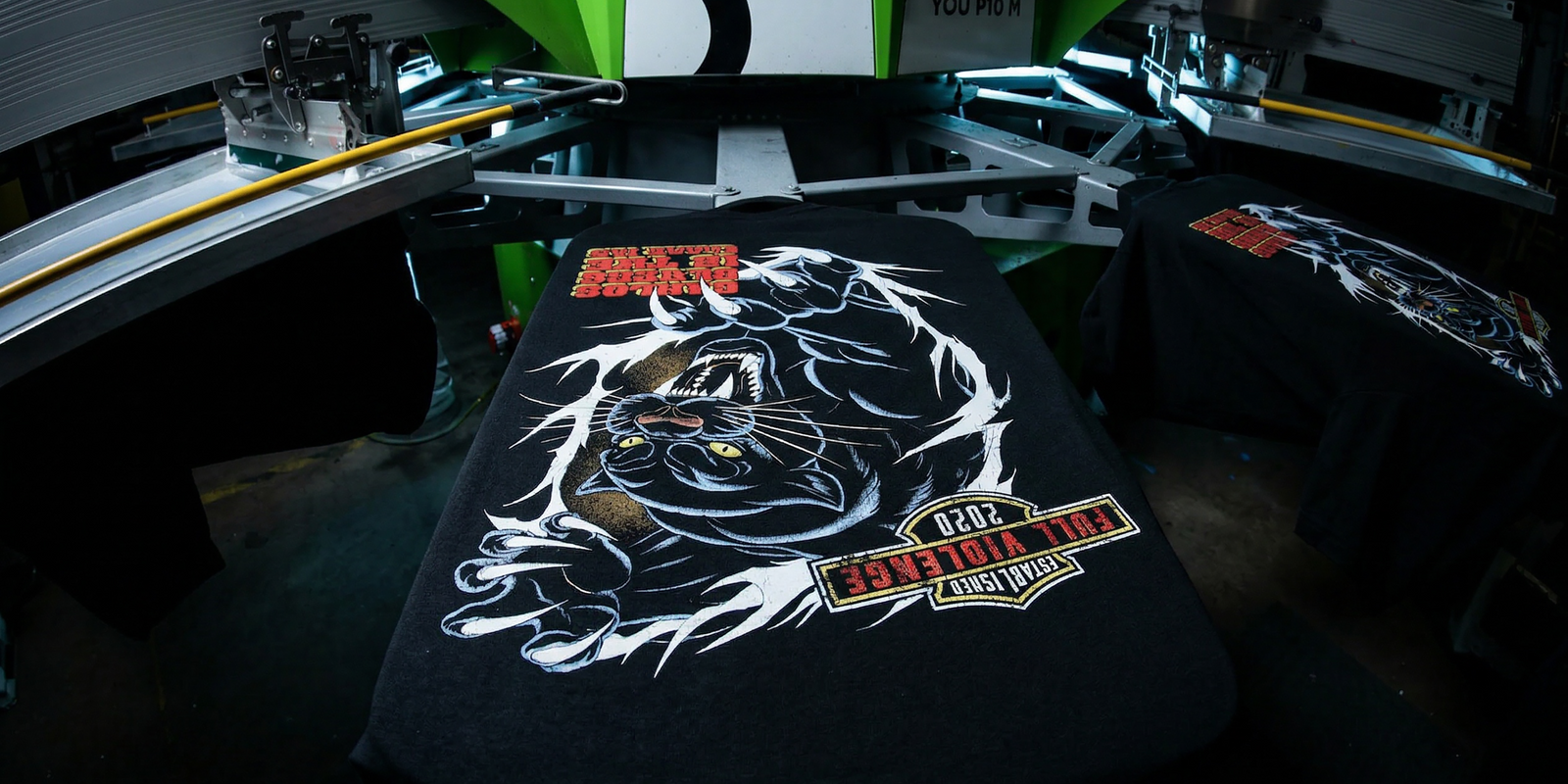
Screen printing pushes ink through a prepared screen onto the garment. Each color generally uses its own screen, which makes the setup especially efficient when the same design is repeated across a larger order.
It is usually a strong fit when you need 50, 100, or more pieces, your design is simple and bold, consistent placement matters, or the order uses the same artwork on every garment.
Advantages of screen printing
- Efficient for larger quantities of the same design
- Bold, consistent color and strong ink coverage
- Durable results when the garment is cared for correctly
- Works well for staff shirts, events, schools, teams, and merchandise
When screen printing may not be ideal
It can be less practical for a very small order, artwork with many colors or photographic detail, and projects where every piece needs a different name or number.
When DTF Transfers Are the Better Choice
DTF transfers print artwork in full color onto a transfer film before it is applied to the garment with heat and pressure. The process handles gradients, fine lines, vivid colors, and detailed graphics without creating a separate screen for every color.
DTF is often a strong fit for one-offs, short runs, mixed garment types, personalized team apparel, product samples, or a detailed merch design.

Advantages of DTF transfers
- Full-color artwork without separate screens for each color
- Fine details, gradients, photos, names, and numbers
- Flexible quantities for samples, short runs, and personalized orders
- Works across many common apparel fabrics and garment types
When DTF may not be ideal
For a large run of the same simple design, screen printing may deliver better production efficiency. Large solid areas can also feel different from ink printed directly through a screen, so artwork size and placement should be reviewed before production.

Which Method Feels Better on a Shirt?
The answer depends on artwork coverage, garment weight, and the chosen ink or transfer. A small screen-printed logo can feel very light, while a large area of ink may feel heavier. DTF creates a smooth transfer layer; compact artwork can feel flexible, while a large solid graphic will be more noticeable.
For comfort, avoid judging only by the method name. The print size, amount of solid coverage, garment fabric, and placement all influence the final feel.
Which Method Is More Durable?
Both methods can last when produced correctly and washed according to care instructions. Screen printing has a long history of durability for uniforms and frequently worn apparel. A professionally applied DTF transfer can also withstand repeated wear and washing.
For either method, wash garments inside out in cool water, use a mild detergent, avoid bleach, and dry on low heat or hang dry when possible.
How Artwork and Color Affect the Choice
Simple logos, spot colors, and bold typography are natural candidates for screen printing. Photographic images, gradients, many colors, thin details, and frequent design variations often point toward DTF.
Clean source files improve both processes. Whenever possible, provide vector artwork, high-resolution transparent files, brand color references, print dimensions, placement instructions, garment colors, quantities, and the size breakdown. Review the art requirements before sending files.
How Quantity and Budget Affect the Choice
Screen printing includes setup work for each color, so the cost per piece generally becomes more efficient as quantity increases. DTF avoids separate color screens, which can make it practical for small batches and full-color designs.
There is no single crossover quantity for every order. Garment choice, artwork size, number of print locations, color count, personalization, and deadline all affect the quote.
Common Projects for Each Printing Method
Screen printing projects
- Employee and staff shirts
- School, club, and team apparel
- Fundraiser and event shirts
- Bulk branded merchandise
- Restaurant, construction, and service uniforms
DTF transfer projects
- Short-run merch and product tests
- Full-color illustrations or photographic graphics
- Names, numbers, and personalized team apparel
- Mixed garments or multiple design variations
- Samples and one-off pieces
How to Choose the Right Method for Your Project
Start with five details: the artwork, total quantity, garment type, number of print locations, and deadline. Then consider whether every piece uses the same design or requires personalization.
If the order is large and the design is bold and consistent, screen printing is often the best starting point. If the run is smaller or the artwork is detailed and full color, DTF is often the better fit. Some apparel programs use both methods for different parts of the same campaign.
Why Work With One Print Partner for Both Methods?
A shop that offers both screen printing and DTF can recommend a process based on the actual order instead of a single production capability. Fresh Press Ink is a family-run print and promotional company in Roseville, California, helping customers coordinate apparel with embroidery, hats, stickers, banners, and promotional products.
Ready to compare options for your artwork? Share your design, quantity, garments, and deadline so the team can recommend the right production method.
Request a custom apparel quote
FAQ: Screen Printing vs. DTF Transfers
Is screen printing or DTF better for small orders?
DTF is often more practical for small orders because it does not require a separate screen for every color. The final choice still depends on the artwork, garment, and print size.
Which method is better for full-color designs?
DTF is generally the stronger option for full-color artwork, gradients, photos, and fine detail. Screen printing is especially effective for bold designs with a limited color palette.
Is screen printing good for business uniforms?
Yes. Screen printing is a dependable choice for larger uniform orders using the same logo. DTF can be useful when the uniform design is full color or when individual names and numbers are required.
Can both methods be used in one apparel program?
Yes. A business might use screen printing for a large staff order and DTF for limited-edition merchandise, samples, or personalized pieces.
How do I choose between screen printing and DTF transfers?
Compare your artwork, quantity, garment, print locations, personalization needs, timeline, and budget. Fresh Press Ink can review those details and recommend the best fit before production.